Ml In 1/3 Cup: The Ultimate Guide to Accurate Measurement
Are you tired of constantly wondering how many milliliters are in one-third cup? Don't worry; you're not alone! Many people find it confusing to convert between different units of measurements. Whether you're a professional baker or just someone who loves cooking, accurate measurement is crucial for getting the perfect recipe. This comprehensive guide will help you understand everything you need to know about measuring ml in one-third cup.
Cooking and baking require precise measurements to achieve the desired results. A slight variation in measurement can significantly impact the texture, flavor, and overall quality of your dish. Therefore, it's essential to be well-versed with different measurement units and their conversions. One-third cup is a common unit of measurement used in recipes, especially for liquids such as milk, water, or oil. However, metric units such as milliliters (ml) are more commonly used in most parts of the world. Therefore, knowing how to convert ml to one-third cup or vice versa is vital for any cook or baker.
Section 1: What is One-Third Cup?
One-third cup is equivalent to 5 tablespoons plus one teaspoon. It's a standard unit of measurement in the United States and some other countries. One-third cup is often used in recipes for liquids such as milk, cream, or oil. For dry ingredients like flour or sugar, one-third cup is equal to approximately 43 grams.
To measure one-third cup, use a measuring cup that has clear markings for each increment. Fill the measuring cup up to the one-third cup mark and level off the excess using a straight-edged utensil.
Section 2: What is Milliliter (ml)?
Milliliter (ml) is a metric unit of volume, commonly used in most countries worldwide. It's equal to one-thousandth of a liter and is often used to measure small quantities of liquids such as water, milk, or oil. One-third cup is equivalent to approximately 79 ml.
To measure ml, use a measuring cup that has clear markings for each increment. Fill the measuring cup up to the desired ml mark and level off the excess using a straight-edged utensil.
Section 3: How to Convert Milliliters (ml) to One-Third Cup?
Converting milliliters to one-third cup can be a bit confusing, especially if you're not familiar with both units of measurement. However, it's relatively easy once you understand the conversion factor.
One-third cup is equal to approximately 79 ml.
Therefore, to convert ml to one-third cup, divide the ml value by 79. For example, if you want to convert 150 ml to one-third cup:
150 ml ÷ 79 = 1.89 (rounded to two decimal places)
Therefore, 150 ml is equal to approximately two-thirds cups.
Section 4: How to Convert One-Third Cup to Milliliters (ml)?
Converting one-third cup to ml is just the opposite of converting ml to one-third cup. Instead of dividing, you need to multiply the one-third cup value by 79.
For example, if you want to convert one-third cup to ml:
1/3 cup x 79 = 78.93 (rounded to two decimal places)
Therefore, one-third cup is equal to approximately 79 ml.
Section 5: How to Measure Small Quantities of Liquids?
Measuring small quantities of liquids accurately can be challenging, especially if you don't have the right tools. Here are some tips for measuring small quantities of liquids:
- Use a measuring spoon instead of a measuring cup for quantities less than ¼ cup.
- Always use a clear measuring cup or spoon with clear markings for accurate measurement.
- Place the measuring cup or spoon on a flat surface at eye level to ensure accurate measurement.
- Fill the measuring cup or spoon just below the desired mark and then use a straight-edged utensil to level off the excess.
Section 6: What are Some Common Kitchen Conversions?
Converting between different units of measurement can be confusing, especially if you're not familiar with both systems. Here are some common kitchen conversions that you may find useful:
- 1 cup = 16 tablespoons = 48 teaspoons
- 1 tablespoon = 3 teaspoons
- 1 fluid ounce (oz) = 29.5735 ml
- 1 liter (L) = 1000 ml
- 1 pound (lb) = 16 ounces
- 1 kilogram (kg) = 2.20462 pounds
Section 7: Why is Accurate Measurement Important in Baking?
Accurate measurement is crucial in baking because it directly affects the texture, flavor, and overall quality of the final product. For example, too much flour can make your cake dense and dry, while too little can result in a crumbly and unstable cake. Similarly, using too much sugar can make your dessert overly sweet, while too little can cause it to lose its structure and collapse.
Therefore, precise measurement is essential for achieving consistent results every time you bake.
Section 8: How to Measure Flour Accurately?
Measuring flour accurately is critical in baking because even a slight variation can significantly affect the texture and overall quality of the final product. Here are some tips for measuring flour accurately:
- Always use a dry measuring cup instead of a liquid measuring cup.
- Spoon the flour into the measuring cup until it's full.
- Level off the excess using a straight-edged utensil.
- Don't pack the flour or shake the measuring cup.
- For best results, weigh the flour using a digital kitchen scale.
Section 9: How to Measure Liquid Ingredients Accurately?
Measuring liquid ingredients accurately is essential for achieving consistent results in your recipes. Here are some tips for measuring liquid ingredients accurately:
- Always use a clear measuring cup with clear markings.
- Place the measuring cup on a flat surface at eye level for accurate measurement.
- Fill the measuring cup up to the desired mark and level off the excess using a straight-edged utensil.
- Use a liquid measuring cup for larger quantities of liquids (more than ¼ cup).
Section 10: How to Adjust a Recipe if You Don't Have the Right Measuring Tools?
Sometimes you may not have the right measuring tools for a recipe, but that doesn't mean you can't make it! Here are some tips for adjusting a recipe if you don't have the right measuring tools:
- Use a tablespoon instead of a teaspoon for small quantities.
- Use a regular drinking glass as a measuring cup (1 cup = approximately 8 ounces).
- Estimate the quantity based on the size of the container (e.g., half-filled jar).
- Use a digital kitchen scale for precise measurement.
Section 11: How to Store Measuring Cups and Spoons?
Storing your measuring cups and spoons properly can help keep them clean and organized. Here are some tips for storing your measuring cups and spoons:
- Keep them together in a designated drawer or container.
- Hang them on hooks inside a cabinet door.
- Attach them to a magnetic strip on the wall.
- Label each one with its respective measurement to avoid confusion.
Section 12: What are Some Common Mistakes to Avoid When Measuring Ingredients?
Making mistakes when measuring ingredients can significantly affect the final product's quality. Here are some common mistakes to avoid when measuring ingredients:
- Using the wrong measuring tool (e.g., using a liquid measuring cup instead of a dry measuring cup).
- Not leveling off the excess (e.g., leaving flour heaped on top of the measuring cup).
- Packing the ingredient into the measuring cup (e.g., packing brown sugar).
- Estimating quantities by eye.
- Using old or inaccurate measuring tools.
Section 13: How to Read Recipe Measurements Correctly?
Reading recipe measurements correctly is crucial for achieving accurate results. Here are some tips for reading recipe measurements correctly:
- Check if the recipe author has provided both imperial and metric measurements.
- Follow the measurements as per the recipe instructions.
- If you need to convert between different units, use a conversion calculator or chart.
- Be familiar with common cooking and baking conversions.
Section 14: What are Some Common Cooking and Baking Abbreviations?
Cooking and baking recipes often use abbreviations to save space and make instructions more concise. Here are some common cooking and baking abbreviations that you may come across in recipes:
- tsp - teaspoon
- tbsp - tablespoon
- oz - ounce
- lb - pound
- c - cup
- pt - pint
- qt - quart
- gal - gallon
Section 15:
In conclusion, measuring ml in one-third cup is essential for any cook or baker. Understanding the different measurement units and their conversions can significantly impact the final product's quality. Accurate measurement is especially crucial in baking, where even a slight variation can significantly affect the texture and overall quality of the final product. By following the tips and guidelines mentioned in this article, you can ensure precise measurement and achieve consistent results every time you cook or bake.
Frequently Asked Questions
Q1. How many ml are in one-third cup?
A1. One-third cup is equivalent to approximately 79 ml.
Q2. How do I measure one-third cup?
A2. Use a measuring cup that has clear markings for each increment. Fill the measuring cup up to the one-third cup mark and level off the excess using a straight-edged utensil.
Q3. How do I convert ml to one-third cup?
A3. To convert ml to one-third cup, divide the ml value by 79. For example, if you want to convert 150 ml to one-third cup: 150 ml ÷ 79 = 1.89 (rounded to two decimal places). Therefore, 150 ml is equal to approximately two-thirds cups.
Q4. How do I convert one-third cup to ml?
A4. To convert one-third cup to ml, multiply the one-third cup value by 79. For example, if you want to convert one-third cup to ml: 1/3 cup x 79 = 78.93 (rounded to two decimal places). Therefore, one-third cup is equal to approximately 79 ml.
Q5. Why is accurate measurement important in cooking and baking?
A5. Accurate measurement is crucial in cooking and baking because it directly affects the texture, flavor, and overall quality of the final product.
Q6. How do I measure flour accurately?
A6. Spoon the flour into a dry measuring cup until it's full. Level off the excess using a straight-edged utensil. Don't pack the flour or shake the measuring cup.
Q7. How do I measure liquid ingredients accurately?
A7. Use a clear measuring cup with clear markings. Place the measuring cup on a flat surface at eye level for accurate measurement. Fill the measuring cup up to the desired mark and level off the excess using a straight-edged utensil.
Q8. What are some common mistakes to avoid when measuring ingredients?
A8. Using the wrong measuring tool, not leveling off the excess, packing the ingredient into the measuring cup, estimating quantities by eye, and using old or inaccurate measuring tools.
Q9. How do I store measuring cups and spoons?
A9. Keep them together in a designated drawer or container, hang them on hooks inside a cabinet door, attach them to a magnetic strip on the wall, and label each one with its respective measurement to avoid confusion.
Q10. How do I read recipe measurements correctly?
A10. Check if the recipe author has provided both imperial and metric measurements. Follow the measurements as per the recipe instructions. If you need to convert between different units, use a conversion calculator or chart. Be familiar with common cooking and baking conversions.
15 Ml in 1/3 cup Images

Grams To Cups Conversion Table Baking Conversions Baking Conversion

Convert Your Baking Measurements From Cup To Grams Easily With This

32 Best Baking Measurement Conversion Charts Images On Pinterest
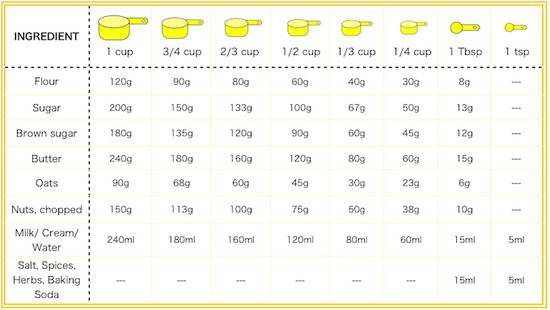
1000 Images About Measurements On Pinterest

Tablespoon To Cup Calculations Firsthealthmagcom Baking Conversion

Size Of Paper Cup Google Cup Drinking Cup Bottle Packaging

Pin On SCHOOL Basic Knowledge Educational Articles And Videos

Cups To Grams Conversions For Common Ingredients Cup To Gram

Cups To Tablespoons Conversion Chart Baking Conversion Chart Cooking

Pin On Keto Low Carb

Baking And Cooking Conversions Imperial To Metric Cups Spoons

Cup Conversions For Metric And Imperial Food Useful Information

Do You Struggle To Remember Volume Conversions While Cooking Print Out

Oz To TSP Conversion Chart International Capicity And Formulas To Cup

How Many Tablespoons In A Cup Easy Conversions Baking Conversion
Posting Komentar untuk "Ml In 1/3 Cup: The Ultimate Guide to Accurate Measurement"